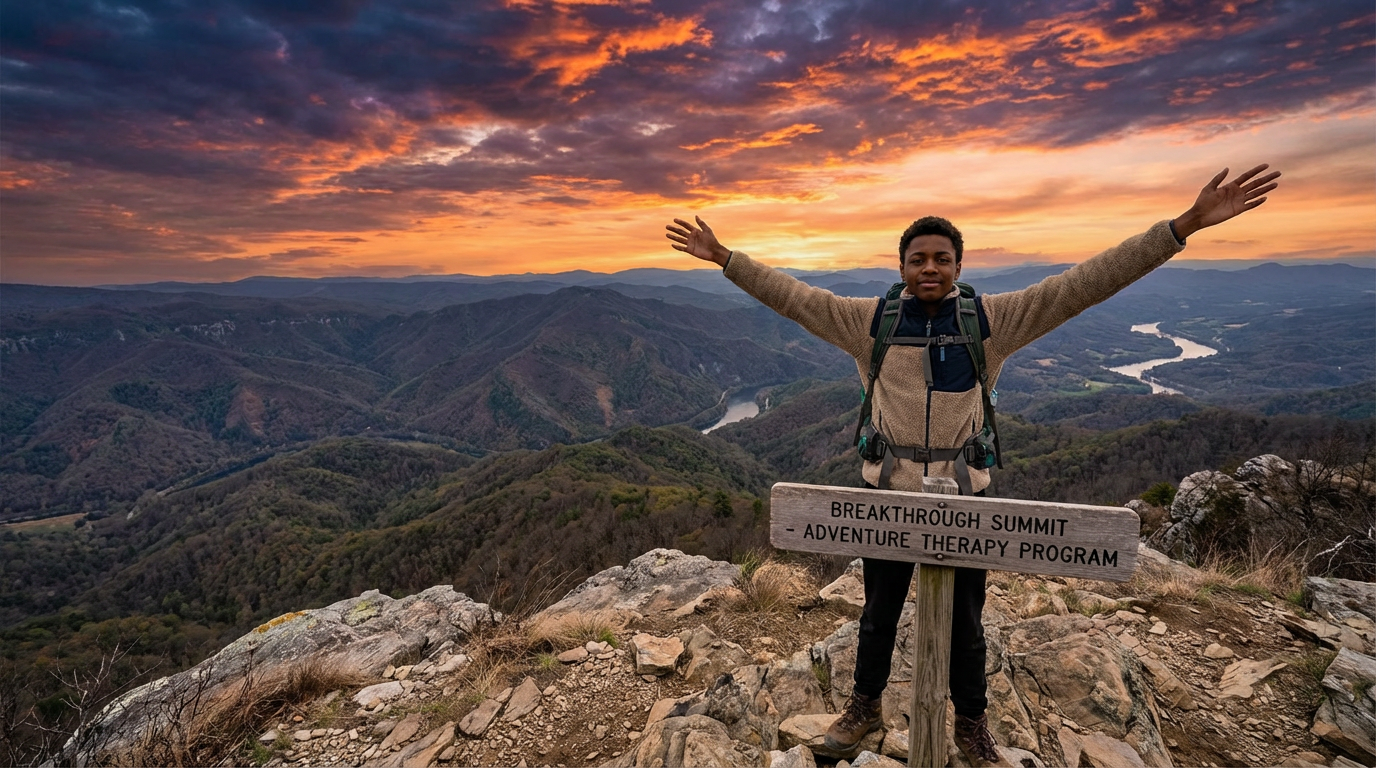
There's something about being on a mountain, navigating a river, or sitting around a campfire that breaks through walls that months of office-based therapy couldn't touch.
Adventure therapy isn't just "fun outdoor activities." It's a powerful therapeutic modality that uses challenge, nature, and experience to create lasting change.
Why Traditional Settings Sometimes Fall Short
For many struggling teens, the therapy office becomes just another place where they perform, shut down, or go through the motions. The artificial setting can reinforce the very patterns you're trying to change:
- Passivity (sitting, talking, waiting for someone else to fix things)
- Intellectualization (talking about problems without experiencing solutions)
- Disconnection from their body and emotions
- Lack of real-world application
What Makes Adventure Therapy Different
Adventure therapy creates conditions for organic growth:
1. Natural Consequences Replace Lectures
If you don't pack your gear properly, you get wet. If you don't communicate with your team, you don't reach the summit. Nature provides immediate, non-judgmental feedback that builds responsibility.
2. Challenge Builds Competence
Struggling teens often feel incompetent in every area of life. Successfully navigating a difficult hike, learning to kayak, or completing a ropes course provides undeniable evidence: "I can do hard things."
3. Metaphors Become Real
Instead of talking about "overcoming obstacles," you're literally climbing over them. The lessons stick because they're embodied, not just discussed.
4. Connection Happens Naturally
Side-by-side activities (hiking, paddling, working together) often facilitate deeper conversations than face-to-face therapy. Teens open up when they're not under the spotlight.
What Adventure Therapy Looks Like at Off The Couch
We integrate adventure experiences into our coaching programs:
- Day adventures: Hiking, rock climbing, kayaking in LA and surrounding areas
- Multi-day retreats: Backpacking trips that create space for deeper transformation
- Skill-building activities: Navigation, wilderness skills, team challenges
- Reflection and integration: Processing experiences to extract meaningful lessons
Who Benefits Most?
Adventure therapy is particularly powerful for teens who:
- Are "stuck in their head" and disconnected from their body
- Have low self-esteem or lack confidence
- Resist traditional talk therapy
- Need to rebuild trust in themselves and others
- Struggle with motivation or sense of purpose
- Benefit from experiential learning over verbal processing
The Science Behind It
Research shows adventure therapy effectively addresses:
- Depression and anxiety
- Substance use disorders
- Behavioral issues
- Self-esteem and self-efficacy
- Social skills and relationship building
The combination of physical activity, nature exposure, challenge, and guided reflection creates neurological and psychological shifts that talk therapy alone often can't achieve.
It's Not About the Mountain—It's About the Momentum
The real goal isn't reaching a summit or completing a course. It's helping your teen discover that they're capable of more than they believed. That momentum—that shift from "I can't" to "I did"—transfers into every other area of their life.
Interested in incorporating adventure therapy into your teen's support plan? Let's talk about what that could look like. Schedule a free consultation today.